
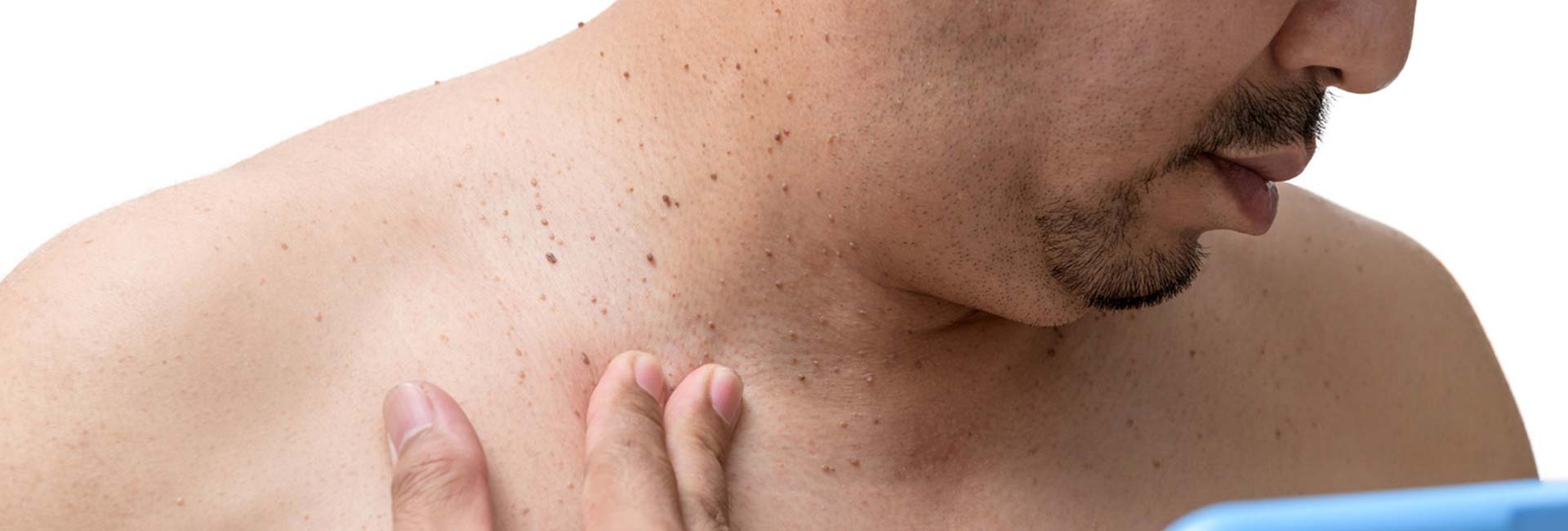
A common growth on the skin is skin tags. These are harmless pieces of skin that hang off by a thin stalk. Most people experience a skin tag at some point in their life. They are often seen in areas where there are skin folds such as the eyelids, nose, neck, breast, groin, or armpits. Skin tags can be irritating, especially when they get caught on clothing or jewelry. Often people try to remove them on their own, but this can be painful and possibly lead to an infection. At Essential Dermatology, expert dermatologist Dr. Krathen will help to remove the skin tag so that it is no longer bothersome.

What Causes Skin Tags?

The actual cause of skin tags is not well-known. However, due to the areas where skin tags typically appear, many believe they form due to chafing and skin-on-skin contact. It is also believed that some mild forms of human papillomavirus (HPV) may be associated with these skin growths.

Symptoms of Skin Tags

  • Protrusion from the skin
  • Smooth or irregular appearance
  • Small growth
  • Skin-colored
  • Becomes irritated when rubbed

Treatments for Skin Tags

Dr. Krathen offers a few different methods for the removal of skin tags. Though skin tags are not harmless, they can be irritating to live with. By speaking with Dr. Krathen during a personal consultation, he can help to recommend the best treatment option for you. During the treatment, the skin tag will be numbed with a topical anesthetic, to minimize any discomfort. Then it will be removed using one of these methods:

  • Surgical excision: removal with a scalpel
  • Electrocautery: applying heat to the skin tag
  • Cryotherapy: freezing it with liquid nitrogen

Skin Tags FAQs

Can skin tags be prevented?

Since these growths are associated with friction and pressure against skin folds, maintaining a healthy weight with good nutrition and regular exercise can help. Additionally, to reduce friction from fabrics and other objects, opt for loose clothing that doesn’t rub up against the skin. Use products to prevent chafing and to keep areas that trap sweat dry. Our specialists can advise on ways to reduce your risk of developing such growths.

Is it true that diabetes causes skin tags?

The connection between diabetes and other metabolic disorders is not well-understood. However, type 2 diabetes, insulin resistance, metabolic syndrome, and other medical conditions are associated with these growths, especially when there are many skin tags and when they recur frequently. These can be signs of systemic or medical conditions that warrant further evaluation.

What other conditions look like skin tags?

Skin tags can resemble other skin concerns like warts, raised moles, and seborrheic keratoses. However, there are some important distinctions. For instance, moles, warts, and SKs do not feature that distinctive stalk. They are attached to the skin.

Can they look like skin cancers?

Yes. Skin tags can resemble certain skin cancers, such as basal cell carcinoma. Like skin tags, BCCs also tend to be raised, flesh-colored, and irregular in appearance. It is important to have your skin regularly screened by our specialists. We can monitor for changes and evaluate skin concerns. When we understand the true nature of your concern, only then can our specialists recommend the most appropriate steps forward.

Can I use a wart remover on a skin tag?

Leave the removal of skin tags and other conditions to the professionals. Products like wart removers are not designed for skin tags. Just because these growths may have similar features does not mean they share the same suitable treatments. Because warts are firm and skin tags are soft, powerful wart removers can actually damage your skin. You may develop irritation or even scars in the area where the product is applied.

How do you know the best treatment for me?

Treatment recommendations are based on a thorough evaluation of your skin tag. We consider factors such as the skin tag’s:

  • Size
  • Structure (is it fleshy?)
  • Location
  • Cosmetic and functional goals

How do I prepare for treatment?

We provide you with specific instructions, based on your unique needs as well as your recommended treatment plan. In general, you may need to discontinue taking certain medications that can increase your risk of adverse side effects and complications from treatment. You should not apply any products (such as moisturizer, perfume, and anti-perspirant) to the area to be treated, and you should arrive at our office wearing relaxed clothing. So, we can easily access and treat your tags.

How do I care for my skin after treatment?

Here again, we give you clear and personalized instructions. We also encourage you to contact us if you have any specific questions or if you are wondering about how your skin is healing. It’s generally recommended to keep the sites clean and to apply antibiotic ointment or another product as advised by our team to lock in moisture and prevent the site from crusting over. The treated areas are particularly photosensitive, so be vigilant about protecting your skin from sunlight with sunscreen and other UV protection/avoidance measures. Resist the temptation to touch the area, because this can damage the healing area and considerably increase your risk of scars.

Schedule a Consultation

Skin tags are an annoying occurrence that happens to a lot of people. These can be hard to treat but with the expert care of Dr. Krathen and the Essential Dermatology team, we can remove this skin condition.  To get started, call our office at (508) 545-9713 or request a consultation by filling out our online form. To book an appointment, schedule your visit as a new patient using our online scheduler or as an existing patient using the Mass General Brigham Patient Gateway.

Meet Dr. Michael Krathen

Dr. Michael Krathen is a board-certified dermatologist with over a decade of medical training and experience. He studied biology and Spanish, graduating summa cum laude from the University of Pennsylvania, where he also completed medical school. His training included a medical internship at the Beth-Israel Deaconess Medical Center in Boston and a dermatology residency at the combined Boston University/Tufts Residency Program.

Author of various medical journal articles, Dr. Krathen taught at Stanford University School of Medicine and the VA Hospital in Jamaica Plain.

Connect Dr. Michael Krathen on LinkedIn

Credentials You Can Trust

American Academy of Dermatology
American Society for Dermatologic Surgery
New England Dermatological Society
Alpha Omega Alpha
Massachusetts Academy of Dermatology
Dr. Michael Krathen


Success Stories