
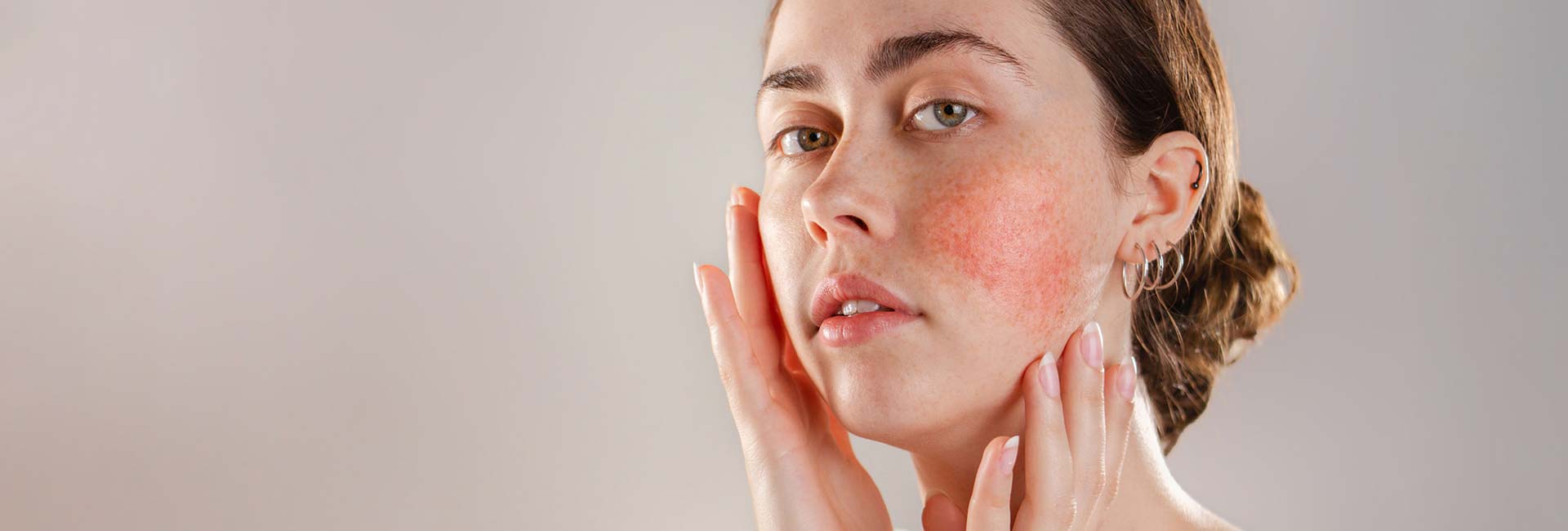
Having redness on your face is not uncommon. When people become flushed or blush, their faces can appear red, but some people constantly have redness to their faces that starts to spread. This is known as Rosacea. This skin condition has many signs and symptoms that affect the appearance and feel of the skin. For patients with this condition, treatment can be hard to find.  Dermatologists recognize four types of Rosacea. The types are Erythematotelangiectatic Rosacea, Papulopustular Rosacea, Phymatous Rosacea, and Ocular Rosacea. At Essential Dermatology, Dr. Krathena, a board-certified dermatologist with extensive experience in treating rosacea, will examine your skin and determine the type of rosacea that you have. From this step, he will work with you to find the right treatment, from topical creams to medical spa treatments, to relieve the symptoms.

What Causes Rosacea?

There is not a well-known cause of rosacea but there are patterns to those who tend to get rosacea. Most people who get rosacea are between 30 and 50 years old and are fair-skinned, typically of Northern European descent. Having a history of acne problems in the family and in their own skin makes the likelihood of getting rosacea increase as well.

Symptoms of Rosacea?

  • Swollen Skin
  • Flushing and Redness in the Face
  • Sensitive Skin
  • Stinging and Burning Sensation
  • Visible Broken Blood Vessels
  • Dry Skin
  • Roughness or Scaling
  • Oily Skin
  • Thickening Skin

Treatments for Rosacea

There is no one cure for Rosacea. Dr. Krathen can create a personalized treatment plan for you to help manage your rosacea and diminish the symptoms of this condition. Topical treatments such as creams can be used as well as laser treatments and oral medications. It is important to be able to recognize any triggers of your rosacea in case lifestyle changes have to be made in order to manage the condition. By speaking with Dr. Krathen during an in-person consultation, he will work with you to find a treatment plan that works.

Rosacea & Redness FAQs

Can rosacea become more noticeable over time if it is not managed?

Rosacea often behaves differently from temporary skin irritation because it may gradually become more visible over time. Some patients initially notice occasional redness that seems minor but later realize episodes become more frequent or last longer than before. In some cases, persistent inflammation can make redness appear more constant and may contribute to visible changes in skin texture or appearance. Progression varies from person to person, and not everyone experiences worsening symptoms. Early evaluation may help patients better understand patterns and develop a management plan that supports long-term skin comfort and appearance.

Why does my skin feel sensitive even when I do not see obvious redness?

Skin sensitivity does not always appear alongside visible flushing. Many people with rosacea-prone skin describe sensations such as warmth, tightness, tingling, burning, or irritation before noticeable redness develops. The skin barrier may become more reactive to environmental changes, temperature shifts, or ingredients that were previously tolerated. Because sensitivity can occur before visible symptoms, paying attention to how products feel—not just how skin looks—may help patients identify patterns and make more informed skincare choices.

Can rosacea be mistaken for acne or other skin concerns?

Yes. Rosacea is often confused with other conditions because its redness and bumps can overlap with those of several skin concerns. Some individuals assume they have adult acne, skin irritation, allergic reactions, or general sensitivity when rosacea may actually be contributing to their symptoms. Although redness and blemishes may look similar on the surface, the underlying causes and treatment approaches can differ significantly. A professional skin evaluation can help distinguish between overlapping conditions and create a treatment plan that addresses the correct concern.

Does weather affect rosacea and facial redness?

Many patients notice that environmental conditions influence how their skin behaves. Exposure to cold wind, dry air, strong sunlight, humidity changes, or sudden temperature transitions may affect facial redness differently depending on the individual. Indoor heating and seasonal shifts may also contribute to skin discomfort. Because environmental triggers vary from person to person, identifying patterns may be useful when creating daily skincare habits and selecting treatment strategies that support more stable skin.

Are gentle skincare routines better for people with rosacea-prone skin?

For many individuals, simplifying skincare can sometimes improve comfort. Using too many products, introducing frequent changes, or relying on harsh cleansing routines may leave already reactive skin feeling more irritated. Gentle cleansing, consistent hydration, and thoughtful product selection may help support the skin barrier and reduce unnecessary stress on sensitive areas. That does not necessarily mean avoiding all active ingredients—it simply means selecting products intentionally and adjusting routines based on how the skin responds over time.

Can rosacea affect confidence and daily routines?

Facial redness can influence more than physical appearance. Some patients find themselves changing skincare habits, avoiding photographs, modifying social plans, or becoming frustrated by unpredictable changes in their skin. As rosacea often affects visible areas of the face, symptoms can affect confidence and cause emotional stress. Managing rosacea is not only about reducing visible redness—it can also involve helping patients feel more comfortable and confident in everyday situations.

Is it possible to create a long-term plan for managing rosacea?

Yes. Although rosacea may not completely disappear, many patients benefit from creating a sustainable long-term approach rather than reacting only during symptom flares. A personalized strategy may include treatment recommendations, skincare adjustments, trigger awareness, and periodic reassessment as skin needs evolve. Patients in Natick, Needham, and surrounding Massachusetts communities often find that individualized care helps them better understand their skin and maintain more consistent results over time while supporting overall skin health.

Schedule a Consultation

At Essential Dermatology, we help our patients to achieve their best skin through our various skin treatments. To get started, call our office at (508) 545-9713 or request a consultation by filling out our online form. To book an appointment, schedule your visit as a new patient using our online scheduler or as an existing patient using the Mass General Brigham Patient Gateway.

Meet Dr. Michael Krathen

Dr. Michael Krathen is a board-certified dermatologist with over a decade of medical training and experience. He studied biology and Spanish, graduating summa cum laude from the University of Pennsylvania, where he also completed medical school. His training included a medical internship at the Beth-Israel Deaconess Medical Center in Boston and a dermatology residency at the combined Boston University/Tufts Residency Program.

Author of various medical journal articles, Dr. Krathen taught at Stanford University School of Medicine and the VA Hospital in Jamaica Plain.

Connect Dr. Michael Krathen on LinkedIn

Credentials You Can Trust

American Academy of Dermatology
American Society for Dermatologic Surgery
New England Dermatological Society
Alpha Omega Alpha
Massachusetts Academy of Dermatology
Dr. Michael Krathen


Success Stories