
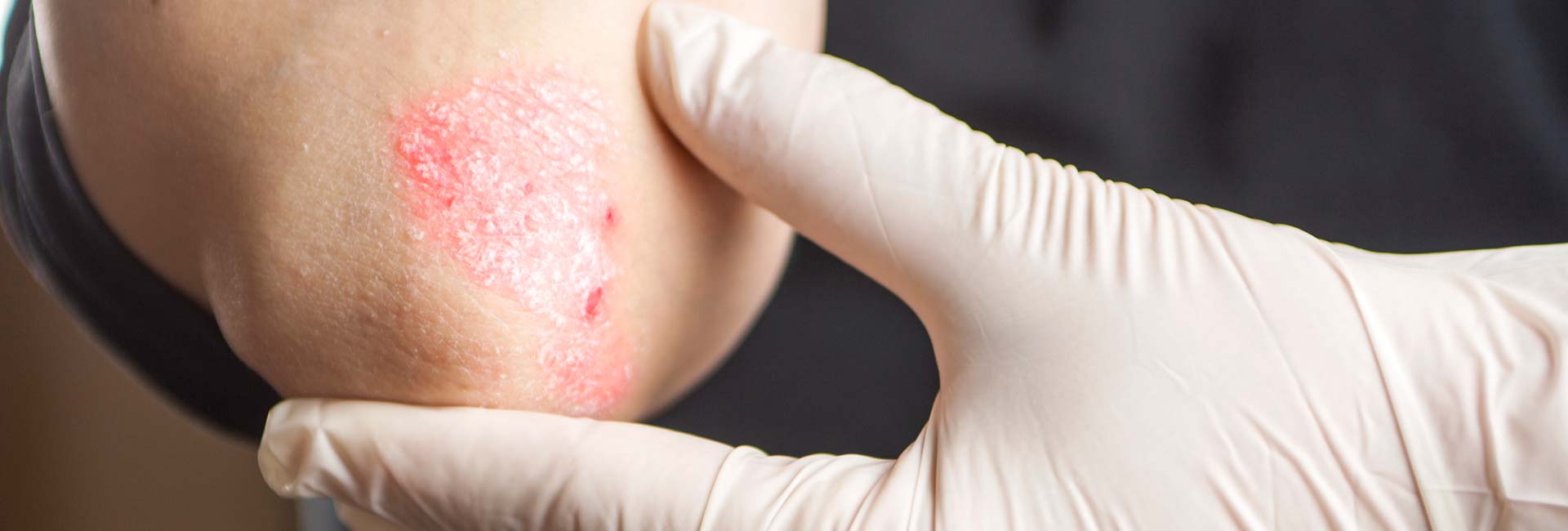
Psoriasis is a skin condition that can last for your entire life. This condition can cause a lot of discomfort for patients. Not only can it be hard to treat, but it can leave patients feeling self-conscious and embarrassed by their skin. Psoriasis is often characterized by patches of red, dry, scaly skin that is whitish and very itchy. Psoriasis most commonly appears on the elbows, knees, scalp, and lower back. At Essential Dermatology, Dr. Krathen, a board-certified dermatologist with extensive experience in treating psoriasis, will work with you to diagnose your psoriasis and find the right treatment to help manage the symptoms.

What Causes Psoriasis?

Contrary to popular belief, psoriasis is not contagious. It is a genetic and congenital condition, meaning that it can develop at a young age and continues throughout your life. If you have family members with psoriasis, then you have a higher chance of getting this skin condition. The characteristics are typically caused by an excess production of skin cells that pile up. The plaques are not constant but can have flare-ups caused by different triggers, varying from patient to patient.

Symptoms of Psoriasis?

  • Patches of thick, raised skin called plaques
  • Different-sized plaques
  • Scale
  • Salmon colored areas
  • Sore or painful skin
  • Dry, red, tender skin

Treatments for Psoriasis

Although psoriasis cannot be cured, there are many things that Dr. Krathen can do to help mitigate the symptoms and manage flareups. Dr. Krathen will examine your skin, talk to you about your psoriasis symptoms, and flareups to create a personalized treatment plan for you. Different methods of treatment are topical medications, oral or injection medications, or light therapy treatments. It is important to monitor your flareups to see if any lifestyle changes should be made.

Psoriasis FAQs

Can psoriasis change over time or appear in new areas of the body?

Yes. Psoriasis often behaves differently over a person’s life and may not always remain in the same location or at the same severity. Some patients experience periods where symptoms remain relatively stable, while others notice plaques appearing in new areas over time. Changes in stress, environment, illness, hormones, medications, or other personal triggers may influence how psoriasis presents. It is also possible for symptoms to shift in texture, thickness, or frequency of flare-ups. Monitoring patterns over time can help guide treatment decisions and support more effective long-term symptom management.

Is psoriasis considered an autoimmune condition?

Psoriasis is widely recognized as an immune-mediated condition that disrupts the growth and renewal of skin cells. Instead of following a normal turnover cycle, skin cells accumulate more quickly than the body can shed them, leading to visible plaques and inflammation. Although symptoms appear on the skin, psoriasis involves immune activity beneath the surface. As a result, treatment approaches may focus on calming inflammation and supporting healthier skin function rather than simply treating the visible plaques. Understanding psoriasis as more than a surface condition can help patients approach management more effectively.

Does weather or climate affect psoriasis symptoms?

Many patients notice seasonal changes in their psoriasis. Cold weather, lower humidity, indoor heating, and reduced moisture exposure may contribute to increased dryness and discomfort during certain times of the year. Others may find that warmer temperatures and regular sun exposure influence symptoms differently. Environmental changes do not affect every patient in the same way, but paying attention to patterns may help identify opportunities to support skin comfort. Seasonal adjustments to skincare habits and treatment plans can sometimes help improve day-to-day symptom control.

Are there certain skincare ingredients that people with psoriasis should avoid?

Because psoriasis can affect the skin barrier, choosing skincare thoughtfully may be important. Products that feel overly harsh, highly fragranced, heavily exfoliating, or excessively drying may sometimes increase discomfort for sensitive skin. Many patients benefit from focusing on gentle cleansing, maintaining hydration, and avoiding routines that leave the skin feeling tight or irritated. At the same time, avoiding all active ingredients is not always necessary. Building a routine around individual skin needs can help support comfort while maintaining healthy skin habits.

Can stress influence psoriasis symptoms even if my treatment has been working?

Stress is frequently discussed by patients because it may coincide with changes in symptom activity. While stress itself does not cause psoriasis, some individuals notice worsening symptoms during periods of increased emotional or physical demands. Stress may influence sleep, routines, and other factors that affect overall skin health. Managing psoriasis often involves looking beyond medications alone and considering habits that support consistency and overall wellness. Recognizing patterns may help patients feel more prepared when symptoms change.

Does psoriasis affect the skin differently on the scalp compared to other areas?

Scalp psoriasis can sometimes feel different from psoriasis affecting other areas of the body because hair can make symptoms harder to manage and monitor. Patients may notice visible flaking, tightness, dryness, or irritation that extends beyond the hairline. Because scalp symptoms may resemble other common conditions, evaluation can help distinguish psoriasis from similar concerns and guide treatment selection. Managing scalp symptoms often requires approaches tailored to that specific area.

Can creating a long-term management plan improve life with psoriasis?

Yes. Because psoriasis is often an ongoing condition with changing patterns, many patients find that having a long-term management strategy provides more confidence and consistency than reacting only during flare-ups. A personalized plan may include treatment adjustments, skincare recommendations, trigger awareness, and regular follow-up, tailored to how symptoms evolve. Patients in Natick, Needham, and surrounding Massachusetts communities often benefit from individualized guidance that focuses not only on reducing symptoms but also supporting comfort, skin health, and quality of life over time.

Schedule Your Consultation

If you have psoriasis and would like to get started on a treatment to manage your symptoms then come into Essential Dermatology in Natick, MA. Dr. Krathen will help create your unique treatment plan that will mitigate your psoriasis. To get started, call our office at (508) 545-9713 or request a consultation by filling out our online form. To book an appointment, schedule your visit as a new patient using our online scheduler or as an existing patient using the Mass General Brigham Patient Gateway.

Meet Dr. Michael Krathen

Dr. Michael Krathen is a board-certified dermatologist with over a decade of medical training and experience. He studied biology and Spanish, graduating summa cum laude from the University of Pennsylvania, where he also completed medical school. His training included a medical internship at the Beth-Israel Deaconess Medical Center in Boston and a dermatology residency at the combined Boston University/Tufts Residency Program.

Author of various medical journal articles, Dr. Krathen taught at Stanford University School of Medicine and the VA Hospital in Jamaica Plain.

Connect Dr. Michael Krathen on LinkedIn

Credentials You Can Trust

American Academy of Dermatology
American Society for Dermatologic Surgery
New England Dermatological Society
Alpha Omega Alpha
Massachusetts Academy of Dermatology
Dr. Michael Krathen


Success Stories